Lipce’s labor crisis and fallow fields
The PeasantsLipce’s labor crisis and fallow fields expose the dependence of village agriculture on work that women, already responsible for households and care, cannot simply absorb when the men are imprisoned. Spring arrives with the earth ready for seed, but the fields remain largely untilled. The crisis is not only a shortage of hands: it makes visible the labor usually taken for granted, the vulnerability of a farming community to the absence of its workers, and the force of mutual aid when Lipce can no longer manage alone.
The season arrives before the workers return
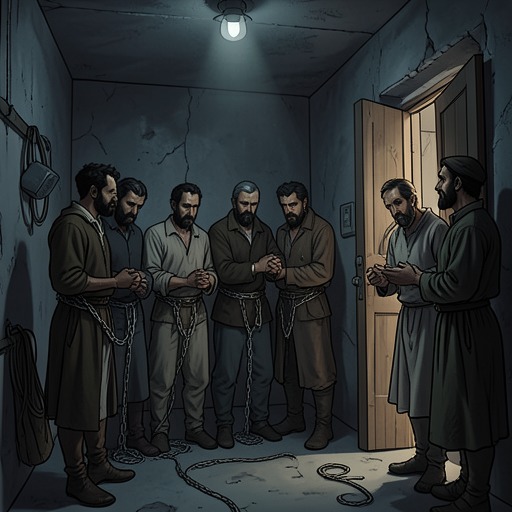
The crisis becomes acute in spring, when the land calls for ploughing, manure, sowing, and planting. The imprisoned men have left Lipce without the strength and skill ordinarily assigned to field work. Women are the village’s remaining workforce, but their days are already crowded with tasks that do not pause for the agricultural calendar. Some are pregnant or due to give birth; meanwhile cows are calving, poultry hatching, and sows farrowing. Gardens need planting, potatoes must be sorted from their pits, water drained from fields, and manure lifted and carted. Livestock still require feeding and watering, wood must be split and hauled, and children need care. By evening, women’s backs are numb, their strength spent, and even after their labor the most important work—the fields—remains undone.
Lipce’s women work from dawn until dusk, yet their effort cannot make up for the missing farmers. Elsewhere, spring brings ploughs and sowing; Lipce’s fields lie nearly fallow. From a distance, the fields can seem empty even where people are at work: a few ploughs and carts, women bent over the land, small against its breadth. In the village itself, the women’s weeping is the clearest sign of what has happened. As fewer of them can leave their cottages to work, the crisis deepens rather than easing through sheer exertion.
Fallow land and the cost of absence
The abandoned fields are a material record of the prisoners’ absence. Lipce’s land is fertile and ready for cultivation, but its women’s labor cannot substitute for the work of the men in gaol. Ploughing, sowing, and tilling fall behind; in place of grain, weeds spread across the fields. Charlock, thistles, goosefoot, sorrel, couch grass, mullein, and burdock take hold of ground that had been prepared for crops. The image reverses the usual promise of spring: growth continues, but without cultivation it yields no harvest for the community.
The contrast is sharpened by the season’s beauty and abundance. Birds return to their nests, winter grain grows, flowers appear along the marshes, and warm rain and sunshine revive the countryside. These signs of renewal cannot themselves feed the village. In the neighboring villages, peasants plough and plant; in Lipce, the fields remain idle despite the women’s long days. The land’s readiness makes the crisis more, not less, painful: the opportunity to sow is present, but the people needed to act on it are detained.
The crisis also develops against a background of rural precarity rather than in isolation from it. Before the spring emergency, Hanka Borynowa describes a household strained by poverty, conflict, and dependence on others’ work; she has spent weeks in another household amid daily quarrels and has little space to voice her grief. When she finally confides in the organist’s wife and others, their pity is accompanied by practical help: she is offered spinning work. Such episodes show how survival depends on fragile exchanges of labor and support even before the fields are left untended.
The women’s work and its limits
The imprisoned men’s absence shifts agricultural labor onto women, but it does not erase their existing responsibilities. The narrative sets field work beside childbirth, animal care, food preparation, housework, and the demands of children, showing that the labor crisis is also a crisis of social reproduction. The women do not merely fail to work hard enough: they are already working to exhaustion, and the number and variety of tasks exceed what they can accomplish. The limits are physical and structural, made especially stark by the seasonal deadline for sowing.
Hanka’s experience traces this burden at the level of one household. After returning to the farm, she remembers hunger, sorrow, Antek Boryna’s infidelities, and the conflicts she has endured; her return to the land gives her a renewed sense of security and belonging. Later, despite being physically weakened after childbirth, she goes to inspect the farm when news rouses her from bed. Her actions connect care for the household to stewardship of the land: managing the farm is not a single task but continuing attention to its needs, undertaken even when her own strength is compromised.
The women’s exhaustion also has a social dimension. While working, they talk and condemn the village; their chatter carries the strain of a community whose ordinary order has been disrupted. Their labor sustains daily life but cannot prevent the fields from falling behind. The gap between their effort and its insufficient result is the defining measure of the crisis.
Neighboring aid restores the fields
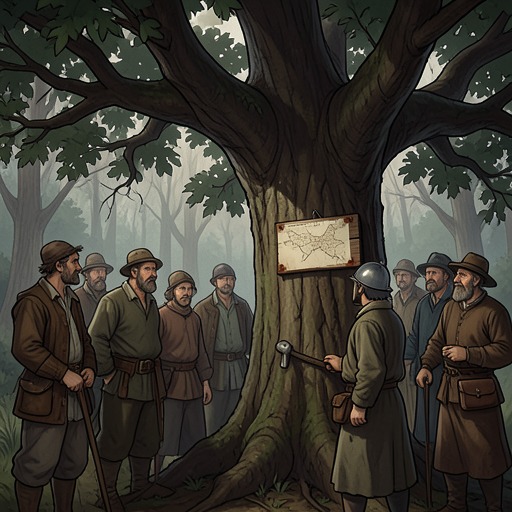
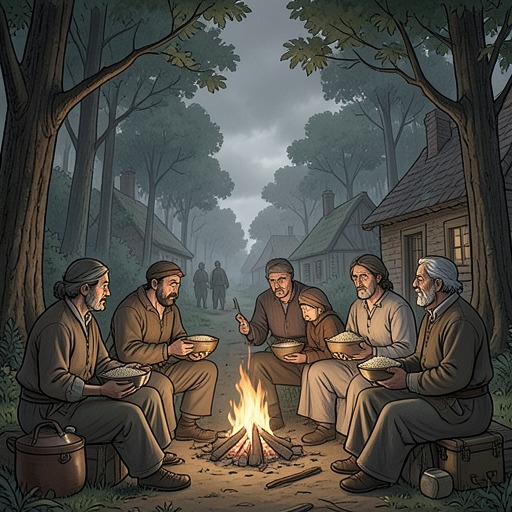
Relief comes when Rocho announces that neighboring villagers will arrive together to help Lipce in the fields. At first the news seems too unlikely to trust; the priest confirms it, and disbelief gives way to public joy. The response is practical as well as emotional. Lipce’s households prepare bread, food, and drink, ready carts and potatoes for planting, and spread the manure waiting in heaps. Some families take food on credit from the inn and mill, accepting new obligations in order to receive their guests properly.
When the neighbors arrive, the empty fields revive. Carts emerge from yards, ploughs move along the paths, and people gather across the potato patches, barley field, stubble, and weed-choked fallow land. Greetings, barking dogs, and the movement of horses transform the silence into collective work. Then the noise subsides: whips and harness sound, the ploughs press into the earth, and the first dark clods turn over. The workers cross themselves and begin to sow. Their labor takes on the character of a communal rite, as seed is entrusted to the earth for a future harvest.
The assistance does not erase the imprisonment or the weeks of lost work. It does, however, interrupt the isolation that has left Lipce unable to cultivate its land. The crisis thus reveals both the limits of household labor when male workers are absent and the possibility of collective support across village boundaries. Later, after the fields have been worked, heat waves at the end of May scorch vegetables, dry streams, and threaten potatoes, while winter crops fare better. Labor can restore cultivation, but it cannot make the harvest secure against weather.
Seasonal vulnerability and communal survival
The fallow fields connect the village’s human crisis to the agricultural cycle. Spring is ordinarily a season of renewed work, but here its signs of life sharpen the consequences of imprisonment: the earth is ready, neighboring communities are sowing, and Lipce cannot keep pace. The contrast between fertile growth and weeds spreading across unworked land gives physical form to a social absence.
The episode also distinguishes individual endurance from collective capacity. Women keep households and livestock going and struggle to tend the fields, yet the scale of the work defeats them. Only when neighbors contribute their labor can ploughing and sowing resume on the necessary scale. The fields therefore register more than the loss of a workforce: they show how the survival of a farming community depends on shared labor, seasonal timing, and support beyond the household. Even after help arrives, drought and crop damage remain possible, underscoring that recovery is a beginning, not a guarantee.